A year of building Chord: What we learned
Michalis Daniilakis
When we started building Chord, we had a simple goal: make it easier for people to record great conversations, no matter where they are. Podcasts, interviews, team discussions, stories. So much valuable content today starts as a call between people who aren’t in the same room. But getting high-quality audio and video, and then turning that into something you can actually share, is still harder and more time-consuming than it should be.
Over the past year, we’ve seen the excitement of great conversations, and the frustration when things don’t go as planned. Audio that didn’t come through. Guests struggling with setup. Every support message and feature request taught us something about what really matters when you’re creating, and that’s what we want to share in this post.
Small technical details cause big emotional impact
One of the biggest things we noticed this past year is that a lot of stress happens before the actual conversation even begins.
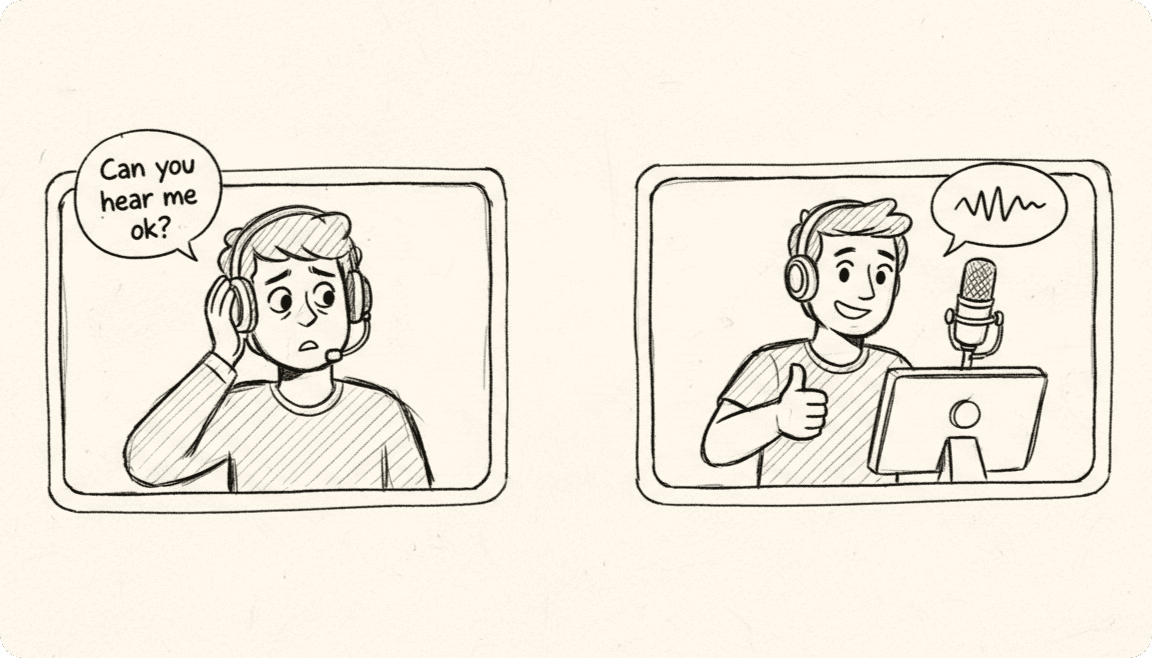
Is the microphone working?
Is the right device selected?
Will the guest’s audio come through this time?
For many creators, hitting “Record” already feels like a small leap of faith. And when something goes wrong, it’s rarely just a technical issue. It’s time that can’t be repeated, energy that’s hard to get back, and sometimes a guest who can’t easily come back for another session.
We’ve seen people respond to this in different ways. Some run multiple test recordings before every session. Others trust that everything will work and hope for the best. Both reactions make sense, but neither should be necessary. Recording should feel boring and predictable, not stressful.
Guests and setup are the biggest variable
Even when hosts are well prepared, remote recording adds another layer of uncertainty: your guest’s setup. Different devices, different browsers, different microphones, different internet connections. All of these things matter, and you usually have very little control over them.
We’ve seen guests join from all kinds of situations:
Home studios with audio interfaces
Unstable public Wi-Fi
Phones and tablets
Sometimes everything works perfectly. Other times, small things like browser permissions or a device that isn’t properly powered can affect the whole session.
What we learned is that reliability isn’t only about better technology. It’s also about helping everyone in the session feel confident and guided, not just the person who scheduled the recording.
Post-production takes more time than people expect
Once the recording is done, most people expect to be almost finished. In reality, that’s when a different kind of work begins. Cleaning up audio, trimming mistakes, exporting files, adding captions, choosing formats. None of it is particularly exciting, but all of it is necessary if you want something you can actually share.
This is the part where we still see a lot of friction, and where we know we still have work to do. Today, getting from a good recording to finished content can involve several steps and tools, and that slows people down. Great conversations don’t always turn into published content as quickly as they should.
That’s exactly what we’re focusing on improving next.
AI helps, but it doesn’t fix the whole workflow
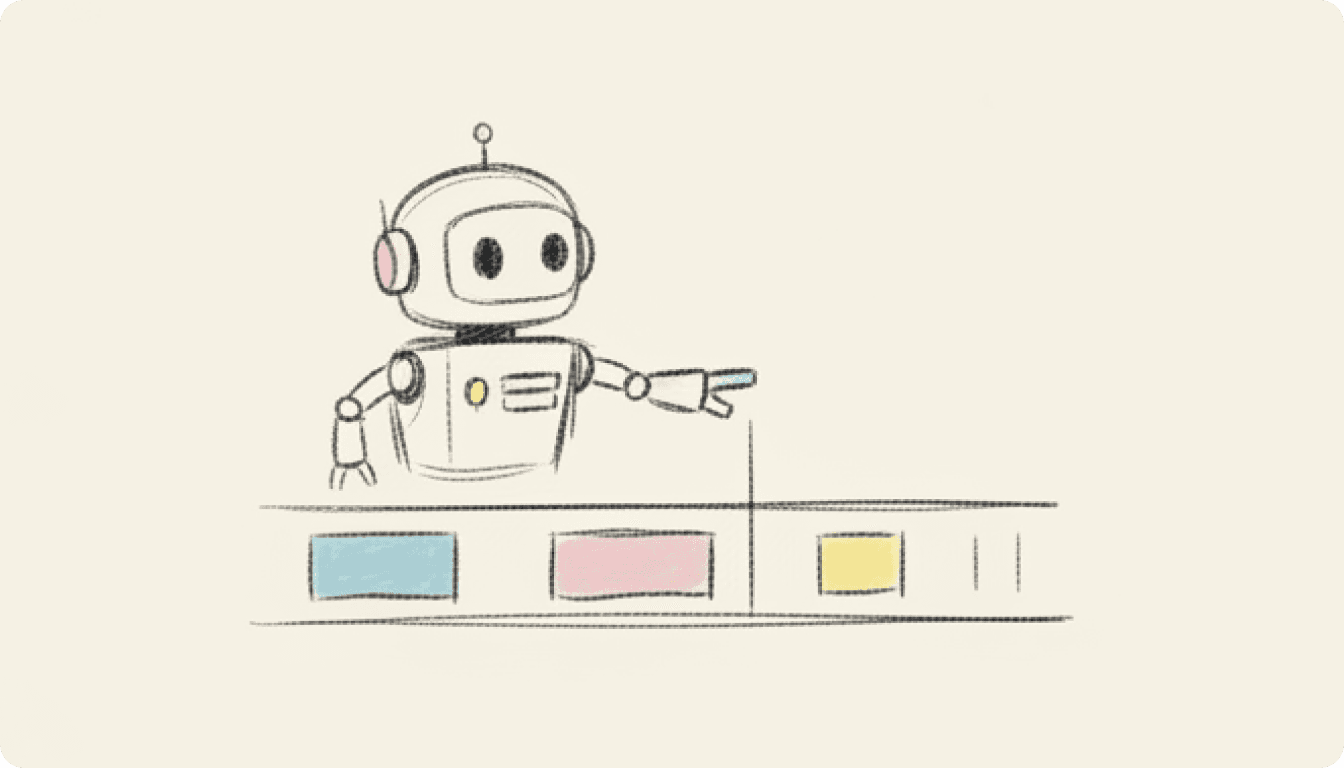
We’ve also seen a big shift in how creators think about editing and repurposing content. AI tools can now help find highlights, generate captions, and even auto-crop for different formats. That’s a huge step forward compared to doing everything manually.
But what we’ve learned is that AI alone doesn’t solve the whole problem. You still need to review what gets selected, adjust timing, choose layouts, and make sure the final result actually represents the conversation well. Especially when you’re working with multiple speakers or longer recordings, there’s still a human step in shaping the story.
What this means for what we’re building next
All of these lessons point to the same thing: creators don’t just need better recording, and they don’t just need smarter AI. They need smoother workflows that connect everything from the planning phase to the moment something gets published.
That’s why we’re focused on reducing friction across the whole process. Fewer setup issues, fewer steps after recording, and tools for editing and repurposing that work together instead of sending people across multiple apps.
We’re not trying to turn Chord into an all-in-one monster overnight, but we are building toward a more connected creation experience, with post-production as a big part of that.
To everyone who’s recorded with Chord, sent us feedback, or helped us track down bugs, thank you. Building this with such an engaged community has been one of the best parts of the past year, and we’re excited to keep improving it together.